
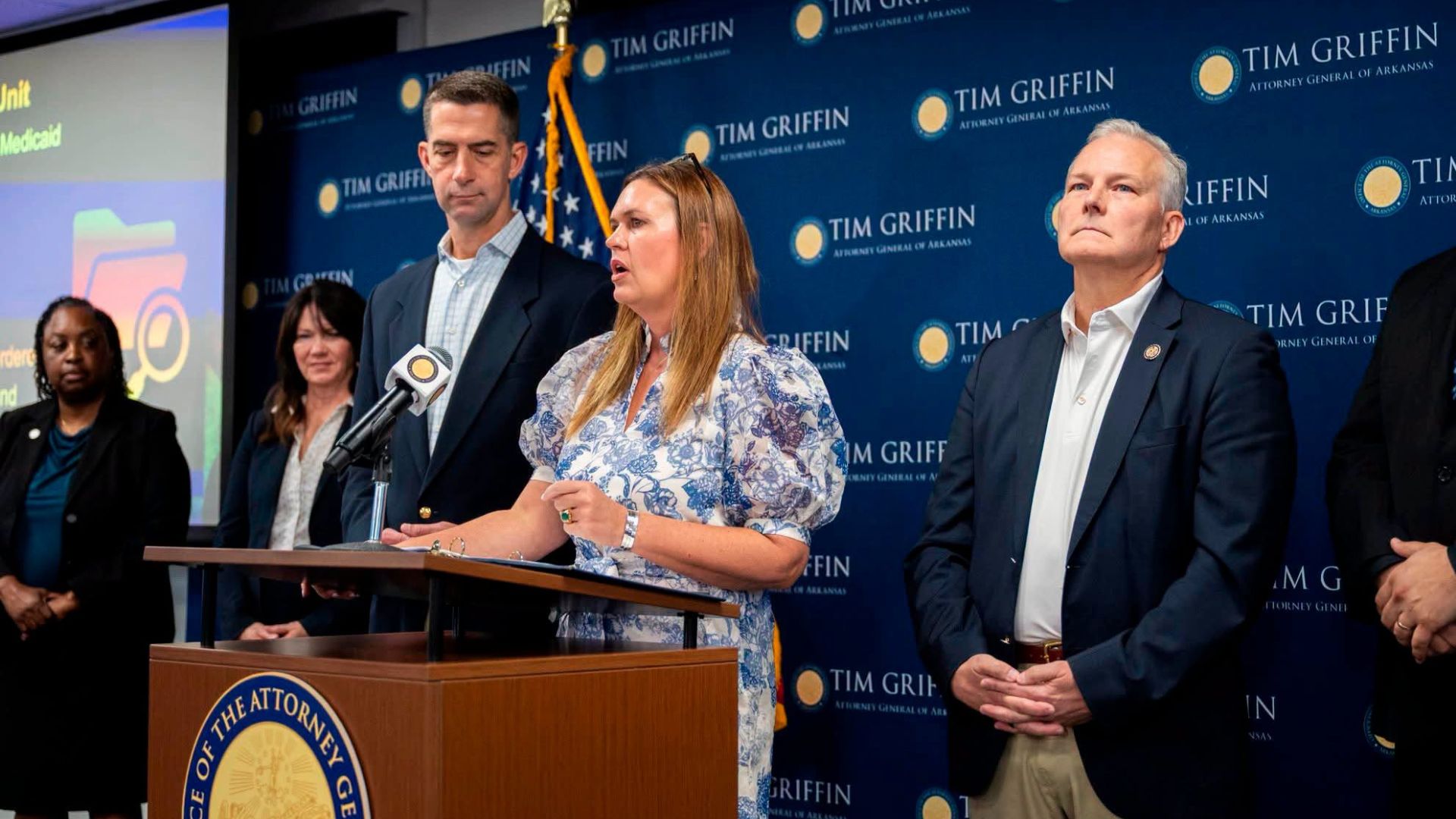
Little Rock, Arkansas – Arkansas Attorney General Tim Griffin, Gov. Sarah Huckabee Sanders, and U.S. Sen. Tom Cotton are backing federal legislation that would give state Medicaid fraud investigators greater authority to pursue fraud involving beneficiaries and recipients.
Cotton announced his support for the STOP FRAUD in Medicaid Act during a press conference hosted by Griffin and Sanders. The proposal would expand the role of state Medicaid Fraud Control Units, allowing them to address beneficiary and recipient fraud in addition to their existing work involving provider fraud.
Griffin praised Cotton for working with Arkansas officials on Medicaid fraud investigations and prosecutions and said the legislation would strengthen those efforts.
“Senator Cotton has been a tremendous partner at the federal level as we work to investigate and prosecute Medicaid fraud in Arkansas. I am grateful for his support of the STOP FRAUD in Medicaid Act, which will empower state Medicaid Fraud Control Units to combat beneficiary and recipient fraud in addition to provider fraud.
“Every dollar lost to fraud is a dollar that cannot be used to provide care and services for Arkansans who genuinely need and qualify for assistance. Medicaid exists to serve children, seniors, individuals with disabilities, and low-income families. When bad actors abuse the system, they divert resources away from those beneficiaries and undermine public confidence in programs that millions rely upon. Arkansas has made combating fraud a priority, and our success is driven by close collaboration with federal law enforcement and oversight agencies. Together, we are protecting taxpayers, preserving program integrity, and ensuring that public benefits remain available for those who qualify for and depend upon them.”
Cotton says Medicaid fraud hurts taxpayers and patients
Cotton said fraudulent Medicaid claims have consequences beyond the loss of government money because the funds involved are meant to provide health care to people who qualify for the program.
“When criminal fraudsters steal Medicaid funds, not only are they padding their own pockets with the dollars of hardworking taxpayers, but they are stripping away access to healthcare from Arkansans who depend on it. I’m thankful for Attorney General Griffin’s leadership in cracking down on this fraud in our state and am pleased to support the STOP FRAUD in Medicaid Act to fight it at the federal level. I look forward to continuing to work alongside our state partners to root out Medicaid fraud once and for all.”
The proposal focuses on expanding the tools available to Medicaid Fraud Control Units. Under the legislation described by Griffin, those state units would be able to combat fraud committed by beneficiaries and recipients, rather than concentrating only on fraud involving health care providers.
Supporters argue that the change would give investigators another way to protect Medicaid funding and ensure that money remains available for eligible people.
Sanders also announced her support for the legislation and described Medicaid as an important safety net that should be protected from criminal abuse.
“Medicaid should be a safety net for Arkansans who need it, not a slush fund for criminals looking to game the system. I’m grateful for President Trump, Vice President Vance, Senator Cotton, and Attorney General Griffin’s leadership to crack down on fraud and protect taxpayers, and I stand with other state leaders in support of the STOP FRAUD in Medicaid Act to give our law enforcement even more tools to combat this crime.”
The three Arkansas officials presented the legislation as part of a broader effort to prevent public money from being diverted through fraud. Griffin emphasized cooperation between state investigators, federal law enforcement and oversight agencies as an important part of Arkansas’ existing approach.
With Cotton now publicly supporting the STOP FRAUD in Medicaid Act at the federal level, Arkansas leaders are pushing for expanded investigative authority that they say would help protect taxpayers while preserving Medicaid resources for children, seniors, people with disabilities and low-income families who qualify for assistance.


